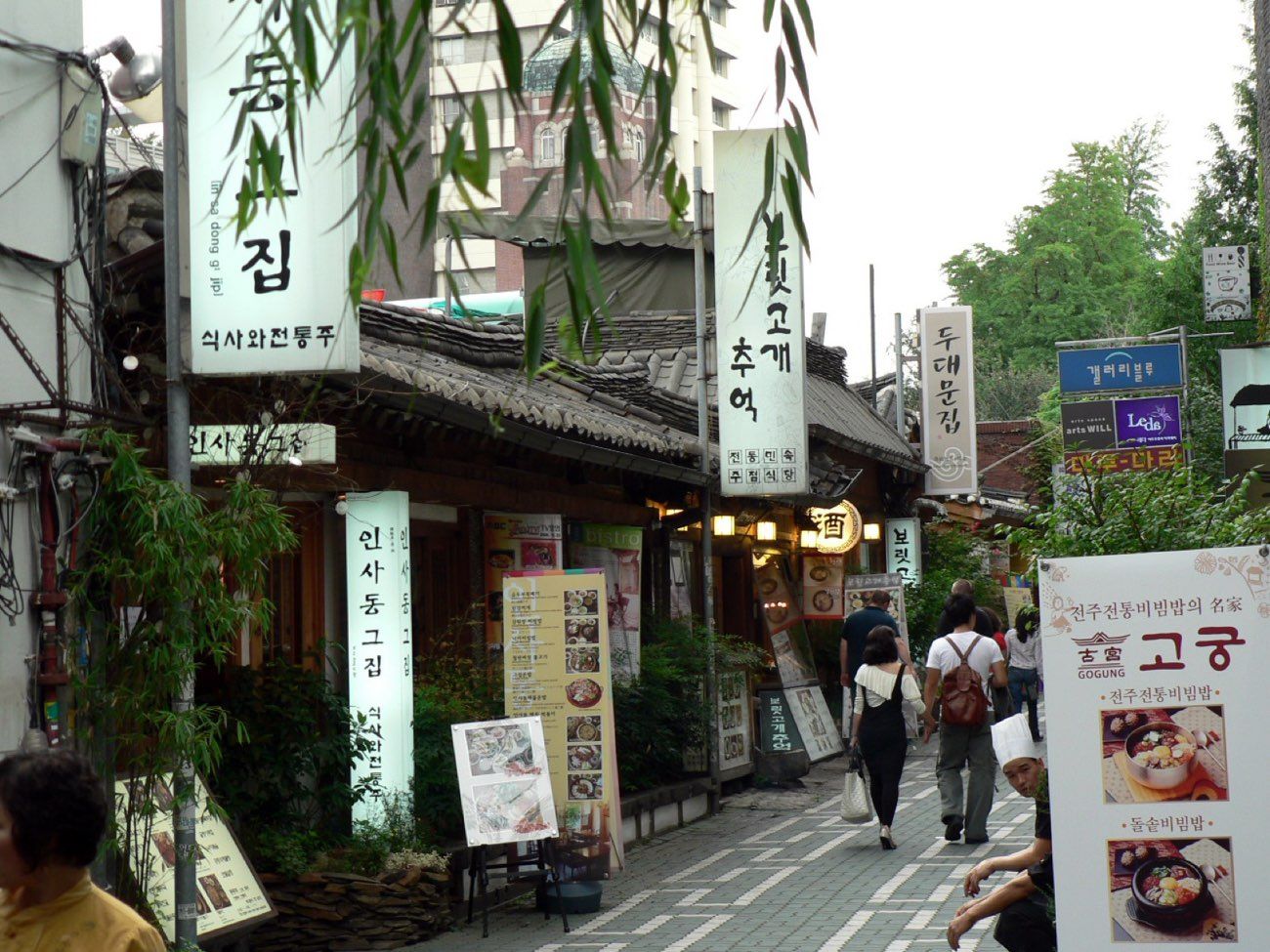
Insadong:
worth it?
Yes — visit Insadong, and do it the smart way: it sits directly between Gyeongbokgung and Bukchon Hanok Village, so pair all three into one old-Seoul day. Walk the main street (pedestrian-only on weekends), climb the spiral Ssamziegil craft complex, then sit down for a proper tea house pot (₩8,000–12,000) — the best hour of slow you'll get in Seoul. Staying overnight is perfectly fine but quiet: streets empty by 22:00. Base in Myeongdong, three subway stops away, unless quiet is exactly what you want.
Stay here if…
Who it's for — and who should avoid it
Insadong is old Seoul's shop window: one long street of brush-and-paper shops, ceramics galleries, tea houses and souvenir stalls, running from Anguk Station down toward Jogyesa Temple. As a visitor you can't place it better — Gyeongbokgung is a 10-minute walk west, Bukchon's hanok alleys 10 minutes north — which is why the correct move is a combined half-day, not a separate trip. Yes, the main drag sells its share of mass-produced souvenirs; the good stuff is one alley back, in the galleries and the tea houses.
As a base it suits a specific traveler: you want quiet after 21:00, you'd rather have a hanok guesthouse than a hotel tower, and you plan to spend your mornings in palaces. If that's you, it's lovely. If you want restaurants at midnight or any nightlife at all, you'll be riding the subway to Hongdae every evening — see where to stay and our Hongdae vs Myeongdong verdict for livelier bases.
Things to do in Insadong
The main street and its alleys. Start at Anguk Station Exit 6 and walk south. Saturdays and Sundays the street goes pedestrian-only and fills with vendors and street performers — the best time to come. Duck into the side alleys for the real galleries and antique shops; the ₩5,000 souvenir stalls stay on the main drag.
Ssamziegil. The four-story spiral craft complex halfway down the street is Insadong's landmark — an upward ramp of small studios selling handmade jewelry, ceramics and leather, topped by a graffiti-covered roof terrace. Free to enter, open ~10:30–20:30, and the best one-stop souvenir hunting in Seoul that isn't airport junk.
Tea houses. The move that makes Insadong worth it: climb to a second-floor traditional tea house and order a pot of omija or jujube tea (₩8,000–12,000, hot-water refills free). Most hide up narrow staircases off the alleys — look for wooden signs, not neon. An hour on floor cushions is the exact antidote to palace-crowd fatigue.
Jogyesa Temple. Five minutes off the southern end: the head temple of Korean Buddhism, free, open dawn to late evening, with giant golden Buddhas and courtyard trees strung with paper lanterns — spectacular around Buddha's Birthday in May. It's a working temple, so keep voices down in the main hall. Afterward you're a 10-minute walk from Gwangjang Market's food alleys for dinner.
The tourist trail runs straight through the restaurants too. Insadong has the strongest local lean of any district we track — the Insadong scores name the hanjeongsik rooms locals rate well above the Google crowd.
Tours through Insadong
a hanok
Insadong and neighboring Bukchon have Seoul's best hanok guesthouses — wooden beams, courtyards, floor bedding — from $45–80, boutique versions $120+. Book these well ahead; each house has only a handful of rooms. Standard hotels here run $80–140.
Search Insadong staysThe practical bit
FAQ
Is Insadong worth visiting?
Yes — as a half-day paired with Gyeongbokgung and Bukchon, which it sits directly between. The tea houses and Ssamziegil justify it on their own, and the whole visit can cost you a ₩10,000 pot of tea. Skipping Insadong on a first trip means missing the connective tissue of old Seoul.
Is Insadong or Myeongdong better to stay?
Myeongdong for most people — livelier evenings, better hotel stock, one stop from the airport train. Insadong wins if you want quiet nights and a hanok guesthouse near the palaces. They're only three subway stops apart, so you'll visit both either way. All bases ranked on where to stay.
How long do you need in Insadong?
Three to four hours: an hour for the main street and alleys, 45 minutes in Ssamziegil, an hour in a tea house, and 30 minutes at Jogyesa Temple. Add Gyeongbokgung in the morning and Bukchon after and you've built the ideal old-Seoul day — that's essentially our 1-day itinerary.
Is Insadong dead at night?
Mostly, yes — shops close by 20:30, tea houses by 21:30, and the street empties by 22:00. A few makgeolli bars hold out in the alleys, but this is not a nightlife district. Treat that as a feature if you're basing here, or ride toward Hongdae for the evening.
What should I actually buy in Insadong?
Handmade over mass-made: ceramics and celadon from the galleries, calligraphy brushes and hanji paper from the old stationers, and craft jewelry in Ssamziegil. Prices are fixed in shops — haggling is for street stalls only. The ₩5,000 'traditional' fridge magnets on the main drag are made nowhere near Korea.